Why TikTok Is So Addictive: Dopamine Loops Explained
Key Takeaways
- Short-form videos exploit your brain's dopamine system by delivering rapid, unpredictable rewards, the same mechanism that makes slot machines addictive.
- Your brain physically changes with heavy use. Brain imaging studies show structural alterations in the prefrontal cortex, amygdala, and basal ganglia, the same regions affected by substance abuse.
- The algorithm personalizes your feed so precisely that removing personalization reduces daily usage by 40 minutes, proving how central it is to keeping you hooked. See the underlying study.
- Quitting triggers a real dopamine deficit: boredom, restlessness, and anxiety that mirror withdrawal symptoms from other addictions.
- Recovery is possible. Neuroplasticity means your brain can rewire itself, and tools like ScrollGuard help by removing the trigger while that rewiring happens.
You open Instagram to reply to a message. A Reel catches your eye. Then another. Then another. Forty-five minutes later, you haven't replied to the message, and you feel worse than before you picked up your phone.
This isn't a failure of willpower. It's neuroscience. Short-form video platforms like TikTok, Instagram Reels, and YouTube Shorts are engineered to exploit specific mechanisms in your brain, mechanisms that evolved millions of years before smartphones existed. Understanding the science behind the scroll is the first step to changing your setup and your habits.
The Dopamine Loop: Your Brain's Reward System, Hijacked
Dopamine is often called the "pleasure chemical," but that's a simplification. Dopamine is really about anticipation. It's the neurotransmitter your brain releases not when you receive a reward, but when you expect one might be coming. It's the chemical that says: "Hey, pay attention. Something interesting might happen next."
When you swipe to a new short video, your brain doesn't know if the next clip will be boring, mildly entertaining, or incredibly funny. That uncertainty triggers a small dopamine release with every single swipe. Not because the content is rewarding, but because it might be.
This creates a loop:
The Dopamine Loop
Each cycle takes only a few seconds. Hundreds of loops can happen in a single session.
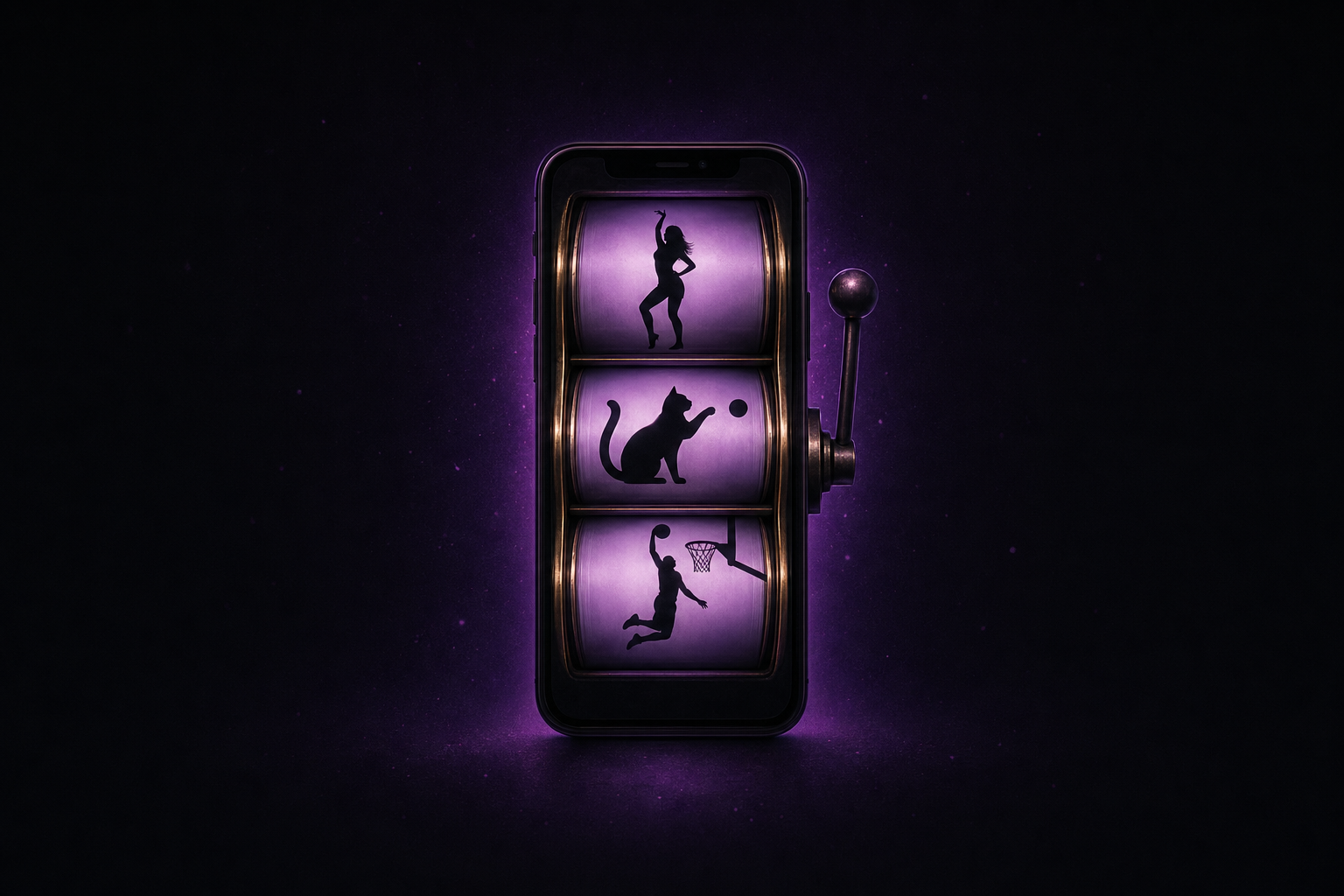
The critical point: dopamine drives the seeking, not the satisfaction. You're not scrolling because each video is great. You're scrolling because your brain is convinced the next one might be. This is the same mechanism that keeps a gambler pulling the slot machine lever. It's not about winning, it's about the possibility of winning.
The Slot Machine in Your Pocket: Variable Ratio Reinforcement
In behavioral psychology, the most addictive type of reward is called a variable ratio reinforcement schedule. This is when rewards come at unpredictable intervals, sometimes after 2 attempts, sometimes after 20. It's the exact pattern used in slot machines, and it's the most powerful known driver of compulsive behavior.
Stanford University researchers have found that the same mechanisms that make gambling addictive are built into every major social media platform. The biggest dopamine hit comes not from watching a great video, but from the uncertainty of whether the next one will be great.
Here's how short-form feeds implement this:
- Unpredictable content quality. Some videos are boring, some are mildly interesting, and occasionally one is genuinely captivating. You never know when the next "hit" will come.
- Frictionless swiping. There's no pause, no menu, no decision to click "next." A single thumb movement delivers the next variable reward.
- No stopping cues. There's no end to the feed. Unlike a TV show that ends or a book with a final page, short-form feeds are literally infinite.
- Auto-play. The next video starts immediately. You don't choose to continue. You have to choose to stop. The default is always "more."
Slot Machines vs. Short-Form Video Feeds
| Feature | Slot Machine | Short-Form Feed |
|---|---|---|
| Reward type | Money (occasionally) | Entertaining content (occasionally) |
| Reward schedule | Variable & unpredictable | Variable & unpredictable |
| Action to continue | Pull lever / press button | Swipe up |
| Natural stopping point | Run out of money | None |
| Dopamine trigger | Anticipation of jackpot | Anticipation of next video |
| Time distortion | Yes | Yes |
The key difference: slot machines require money to play. Short-form feeds are free and always in your pocket.
The Novelty Trap: Why Your Brain Can't Look Away
Humans evolved to prioritize novel stimuli. When our ancestors spotted something new in their environment -a new food source, an unfamiliar animal, a stranger approaching -paying attention to it could mean the difference between life and death. This deep evolutionary wiring is called novelty-seeking behavior, and it's mediated by the dopamine system.
Short-form video feeds exploit this with ruthless efficiency. Every 15-60 seconds, your brain encounters something completely new: a new face, a new topic, a new sound, a new visual style. Each novel stimulus triggers a dopaminergic response, telling your brain: "This is new. Pay attention."
This is fundamentally different from long-form content:
Novelty Frequency: Short-Form vs. Long-Form
Short-form content delivers novelty hits at a rate your ancestors never experienced. Your brain wasn't built for this.
The result: after extended short-form video consumption, slower activities -reading a book, watching a movie, having a conversation -feel boring by comparison. Your brain has been trained to expect a new dopamine hit every few seconds. When one doesn't come, it pushes you back toward the feed.
How the Algorithm Keeps You Locked In
The dopamine loop and novelty trap would be powerful on their own. But modern short-form platforms add a third layer: algorithmic personalization that makes the content progressively harder to resist.
TikTok's recommendation system, for example, combines collaborative filtering (matching you with users who have similar behavior patterns) with content-based filtering (analyzing the metadata, visuals, and audio of each video). It monitors not just what you like and share, but your watch time, scroll speed, and hesitation patterns -implicit behaviors that reveal your preferences even when you don't consciously interact.
How effective is this personalization? Research published in ScienceDirect found that when TikTok's algorithmic personalization was reduced, average daily screen time dropped by 40 minutes and users opened the app 5 fewer times per day. The algorithm isn't just showing you content -it's the primary mechanism keeping you on the platform.
For the wider numbers (average watch time, addiction prevalence, mental health impact, and what leaked platform documents revealed), see our roundup of short-form video addiction statistics.
"The algorithmic personalization of TikTok's For You page plays a crucial role in keeping users engaged on the platform as well as making them return to the platform frequently." - Understanding the Impact of TikTok's Recommendation Algorithm on User Engagement (2024)
The algorithm also creates a feedback loop with the dopamine system. As it learns your preferences better, the "hit rate" of entertaining videos increases, which trains your brain to associate the app with higher reward probability -which makes the dopamine anticipation even stronger -which keeps you scrolling longer -which gives the algorithm more data. The cycle reinforces itself.
What Changes in Your Brain: The Neuroscience
This isn't just about behavior. Brain imaging studies show that heavy social media use causes measurable structural and functional changes in the brain. Research published in Scientific Reports and the Social Cognitive and Affective Neuroscience journal has identified alterations in four key brain regions:
Brain Regions Affected by Compulsive Scrolling
Prefrontal Cortex
Decreased activity. This is your brain's control center -responsible for impulse control, decision-making, and delayed gratification. Heavy scrolling weakens it, making it harder to stop.
Amygdala
Volume reduction. Regulates emotions and stress responses. Changes here mirror those seen in substance abuse and gambling addiction.
Basal Ganglia
Altered reward processing. This area manages habits and reward evaluation. It becomes recalibrated to prioritize short-form content over other rewards.
Anterior Cingulate Cortex
Positive correlation. Unlike other addictions where this area is impaired, social media addiction shows increased grey matter here -potentially reflecting heightened conflict monitoring.
A meta-analysis of neuroimaging studies found that the neural mechanism looks the same in the brain whether someone has a gaming disorder, social media addiction, gambling addiction, or a substance use disorder. According to UC Santa Barbara's Media Neuroscience Lab, the patterns in the reward circuitry are remarkably similar across all of these conditions.
The decrease in prefrontal cortex activity is particularly concerning. The dorsolateral prefrontal cortex, your "mental control center," shows reduced activation in heavy social media users, matching the exact pattern observed in people with recognized addiction disorders. In plain terms: the more you scroll, the harder it becomes for your brain to tell you to stop. This is why tools that remove the trigger entirely are more effective than relying on willpower.
Why Quitting Feels Impossible
If you've tried to quit or cut back on short-form content and struggled, that's not a character flaw. There are specific neurological reasons why it's so difficult:
1. Tolerance
Just like with any addictive stimulus, your brain builds tolerance. As you scroll more, dopamine release from each video decreases. You need to scroll longer and faster to get the same satisfaction you once got from a few minutes. Eventually, you may not even enjoy the content anymore -you're just scrolling to avoid the discomfort of stopping.
2. The Dopamine Deficit State
When you put down your phone after an extended scrolling session, your brain experiences what neuroscientists describe as a dopamine-deficit state. Your brain adapted to the artificially high dopamine levels and now its baseline drops below normal. This manifests as:
- Boredom and restlessness
- Difficulty concentrating on other tasks
- Irritability and anxiety
- An overwhelming urge to pick up your phone again
This is why social media often feels good while you're using it but terrible as soon as you stop. The deficit state drives you back to the app to "fix" the discomfort, completing the addictive cycle.
3. Cue Sensitivity
Your amygdala becomes highly responsive to addiction-related cues. Hearing a notification sound, seeing the app icon on your home screen, or even just feeling bored can trigger intense cravings. These cues are everywhere, making avoidance nearly impossible in a world where your phone is always within reach.
How Tolerance Develops Over Time
Over time, you need more scrolling for less satisfaction. The brain recalibrates its reward system, raising the threshold for what feels good.
Breaking the Loop: What Actually Works
The good news: neuroplasticity works in both directions. The same brain property that allows addiction to rewire your neural pathways also allows those pathways to be restored. Research suggests most people experience substantial neurological healing within 3-12 months of reducing compulsive scrolling, with initial changes occurring within 1-3 months.
But "just stop scrolling" is terrible advice for the same reason "just stop gambling" doesn't cure gambling addiction. The science points to more effective strategies:
Remove the Trigger, Not the App
You don't need to delete Instagram, YouTube, or TikTok entirely. You need to remove the infinite short-form feed, the specific feature that triggers the dopamine loop. This is the approach behind tools like ScrollGuard, which block Reels, Shorts, and other addictive feeds while keeping DMs, stories, and everything else working normally.
By eliminating the trigger entirely, you break the loop at its source. You never enter the infinite scroll, so the dopamine cycle never starts. If you want the practical version of that idea, the guides on blocking Instagram Reels and blocking YouTube Shorts show how to apply it in real life. If you want a full 4-step framework, our guide on how to spend less time on your phone covers the complete behavioral strategy.
Embrace the Boredom Window
The first 1-4 weeks after reducing short-form content will feel boring. This is the dopamine deficit state at work. Your brain is recalibrating. This discomfort is temporary and is actually a sign that your neural pathways are beginning to heal. Filling this time with slower, sustained activities -reading, walking, conversation -helps build new dopamine patterns.
The boredom window is the core mechanism behind the so-called "dopamine detox" trend. For what the actual neuroscience (Lembke, Huberman, Schultz) says about which detox protocols work and which ones rebound, read dopamine detox: what works, what doesn't.
Reduce Cue Exposure
Move social media apps off your home screen. Turn off non-essential notifications. Use app timers as a fallback. Every cue you remove reduces the chance of a craving triggering a relapse into the scrolling loop.
Frequently Asked Questions
Why can't I stop scrolling TikTok or Instagram Reels?
Short-form video feeds use variable ratio reinforcement -the same psychological mechanism behind slot machines. Each swipe might deliver a boring video or something amazing, and your brain releases dopamine in anticipation of the next reward. This unpredictability creates a compulsive loop that is genuinely difficult to break through willpower alone.
Is short-form video addiction a real addiction?
Brain imaging studies show that heavy social media users exhibit structural and functional changes in the same brain regions affected by substance abuse and gambling: the prefrontal cortex, amygdala, basal ganglia, and anterior cingulate cortex. While not yet formally classified as a clinical disorder in the DSM-5, the neurological patterns closely mirror recognized addictions.
How does the dopamine loop work with short videos?
When you see a new short video, your brain releases dopamine -not because the video is rewarding, but in anticipation that it might be. Each swipe triggers a small dopamine release. Over time, your brain builds tolerance and requires more scrolling for the same effect. When you stop, dopamine drops below baseline, creating a deficit state that makes you feel bored or restless -driving you to open the app again.
Can your brain recover from short-form content addiction?
Yes. Thanks to neuroplasticity, the brain can rewire itself. Research suggests that most people experience substantial neurological healing within 3 to 12 months of reducing or eliminating compulsive scrolling, with initial changes in neural pathways occurring within 1 to 3 months.
Why is short-form content more addictive than long-form video?
Short videos deliver novelty every few seconds, triggering frequent dopamine releases. Long-form videos require sustained attention and deliver rewards more slowly. The rapid-fire novelty of short-form content exploits the brain's preference for new stimuli, while the swipe-based interface creates a frictionless loop that never gives your brain a natural stopping point.
Sources
- Sharpe, B.T. & Spooner, R.A. (2025). Dopamine-scrolling: a modern public health challenge requiring urgent attention. Perspectives in Public Health
- He, Q. et al. (2017). Brain anatomy alterations associated with Social Networking Site (SNS) addiction. Scientific Reports
- Developmental changes in brain function linked with addiction-like social media use two years later. Social Cognitive and Affective Neuroscience (2024)
- Stanford Medicine: Addictive Potential of Social Media, Explained
- For you vs. for everyone: The effectiveness of algorithmic personalization in driving social media engagement. ScienceDirect
- Understanding the Impact of TikTok's Recommendation Algorithm on User Engagement. International Journal of Computer Science and Information Technology
- Neuroplasticity in addictive disorders. PMC / Frontiers in Psychiatry
- Neurobiological risk factors for problematic social media use as a specific form of Internet addiction. PMC
- Time Spent on TikTok Statistics (2025). Awisee
- American Psychological Association: Social Media and Mental Health
Break the Dopamine Loop
ScrollGuard blocks Reels, Shorts, and other addictive feeds while keeping DMs, stories, and everything else working normally.